Home > Lenten Blog 2026
Save the last blog for me.
March 26, 2026
Genesis 17:1-8 | John 8:51-59 | Psalm 105:4-11
Just yesterday, I found myself staring at Betsy’s Lenten Blog spreadsheet to discover one Lenten Blog date without a writer. I suggested to Betsy I might look at the day’s readings and write this lone soul of a Lenten Blog. The expression on Betsy’s face suggested the readings might be just a little less than inspirational! LOL, almost!
The next morning, I awoke around 4am with a new Amigos song “Save the Last Dance for Me” fresh on my mind… inspiration for this blog’s title! Surely there has got to be some correlation between this 1960s masterpiece and today’s readings other than the snappy borrowed title?
In recent years, as a lifelong lover, player (guitar), and singer of music (Amigos, St. Luke’s Canterbury Choir), I have become more interested in song lyrics, beyond singing them. Kinda of a deeper dive into “language”. To paraphrase Pastor Jonathan from our Adult Faith Formation study of Scripture, “words matter.” As does context and history and where the writer and reader are… at their places in time.
So I did what any person in 2026 would do at 4am in the morning. I picked up my cell phone and searched the song lyrics for “Save the Last Dance for Me”. Here’s what I found via Google AI:
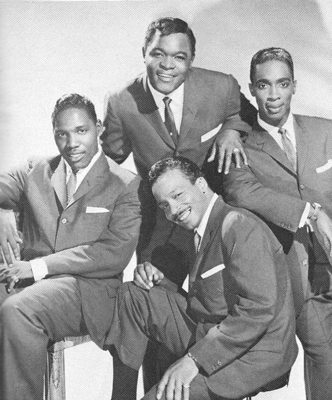
“Save the Last Dance for Me” 1 (famously by The Drifters) is a song about trust, devotion, and secure love, where the narrator tells his partner she is free to dance and socialize with others, but must return to him, the one who truly loves her and is taking her home. Written by Doc Pomus, who had polio and used a wheelchair, it was inspired by watching his new bride dance with guests at their wedding.
Wow. Such inspiration from the songwriter… and a great tune to boot!
Pastor Jonathan also shared with us the varying ways of scriptural interpretation… from literal to narrative-based… I am very much not a literalist… Born Roman Catholic, I was seven years old when “the” church transitioned from the Latin Mass, which few if any parishioners understood, to native English language… and even invited parishioners to read parts of “the Mass”… uh oh… might this be an invitation for us common folk to have a voice and point of view on Scripture? Let’s hope so. But I digress…
Anyway, I took a peek at today’s readings.
John 8:51–59
Jesus said, “Very truly, I tell you, whoever keeps my word will never see death.” The Jews said to him, “Now we know that you have a demon. Abraham died, and so did the prophets; yet you say, ‘Whoever keeps my word will never taste death.’ Are you greater than our father Abraham, who died? The prophets also died. Who do you claim to be?” Jesus answered, “If I glorify myself, my glory is nothing. It is my Father who glorifies me, he of whom you say, ‘He is our God,’ though you do not know him. But I know him; if I would say that I do not know him, I would be a liar like you. But I do know him and I keep his word. Your ancestor Abraham rejoiced that he would see my day; he saw it and was glad.” Then the Jews said to him, “You are not yet fifty years old, and have you seen Abraham?” Jesus said to them, “Very truly, I tell you, before Abraham was, I am.” So they picked up stones to throw at him, but Jesus hid himself and went out of the temple.
OK, the above reading brings me back to our March 4th Adult Faith Formation speaker, Rev. Dr. Daniel Joslyn-Siemiatkoski (Rev. Dr. Dan has published extensive work on reconciling anti-Judaism in Christianity) … His topic was Good Friday & Our Jewish Neighbors… a look into how the Bible and Scripture, especially Good Friday’s readings, historically referencing “the Jews”… who were often cast as the killers of Jesus, thus placing them not in very good light!2 We as Christians in the 21st century are invited to reference “the Judeans”, a people of a certain geographic location, with language a bit less accusatory than “the Jews”… and perhaps, see the Judeans in a more historical way: frightened people persecuted by the Roman Empire and displaced from their homelands. Who wouldn’t be scared-to-death and angry around the time of Christ?
In closing, I recollect these words attributed to Jesus:
“Very truly, I tell you, before Abraham was, I am.”
Think I have heard Fr. John+ and Pastor Jonathan reference Jesus speaking of “I am” in a homily or two this past year. Food for thought.
Rob Walsh
PS: As I write, I am reminded of our last Adult Faith Formation book read titled: “Laugh Your Way To Grace,” written by Rev. Susan Sparks… a great read. : )
1 You can dance
Every dance with the guy
Who gives you the eye, let him hold you tight
You can smile
Every smile for the man
Who held your hand ‘neath the pale moon light
But don’t forget who’s takin’ you home
And in whose arms you’re gonna be
So darlin’ save the last dance for me
Oh I know
That the music’s fine
Like sparklin’ wine, go and have your fun
Laugh and sing
But while we’re apart
Don’t give your heart to anyone
And don’t forget who’s takin’ you home
And in whose arms you’re gonna be
So darlin’ save the last dance for me
Baby don’t you know I love you so
Can’t you feel it when we touch
I will never never let you go
I love you oh so much
You can dance
Go and carry on ’til the night is gone
And it’s time to go
If he asks
If you’re all alone
Can he walk you home, you must tell him no
‘Cause don’t forget who’s taking you home
And in whose arms you’re gonna be
Save the last dance for me
Oh I know
That the music’s fine
Like sparklin’ wine, go and have your fun
Laugh and sing
But while we’re apart
Don’t give your heart to anyone
And don’t forget who’s takin’ you home
And in whose arms you’re gonna be
So darlin’ save the last dance for me
So don’t forget who’s taking you home
Or in whose arms you’re gonna be
So darling, save the last dance for me
Oh baby, won’t you save the last dance for me?
Ooh you make the promise that you’ll save the last dance for me
Save the last dance
The very last dance
For me!
2 A little biblical perspective:
The Bible describes Jesus’s death as a complex event where Roman authorities, specifically Pontius Pilate, ordered the crucifixion, while also depicting Jewish leaders and crowds as instigators. Matthew 27:24–25 is often cited, where a crowd says, “His blood be on us and on our children”. However, it was a Roman execution.
Roman Role: Jesus was crucified by Roman soldiers at the behest of Governor Pontius Pilate, a typical Roman punishment for subversives.
Role of Jewish Leaders: The Gospels highlight that key Jewish religious leaders (the Sanhedrin) played a major role in arresting Jesus and pressuring Pilate to crucify him, often citing blasphemy.
Crowd Reaction: The Gospels, particularly Matthew, note that a crowd in Jerusalem demanded the release of Barabbas and the crucifixion of Jesus.
Theological Perspective: While the Gospels implicate various groups, the theological focus in Christianity is often on the idea of a sacrifice for humanity rather than simply assigning blame to a specific group.
The interpretation of these passages has historically been a source of significant controversy and has been used to fuel antisemitic tropes of “Jewish deicide,” which is the theological position and the antisemitic trope that as a people, the Jews are collectively responsible for the killing of Jesus, even through the successive generations following his death.
Wikipedia