Home > Lenten Blog 2026
A Singers’ Brain on The Song of Mary
March 25, 2026
Isaiah 7:10-14|Psalm 45|Psalm 40:5-10|Canticle15|Hebrews 10:4-10|Luke 1:26-38
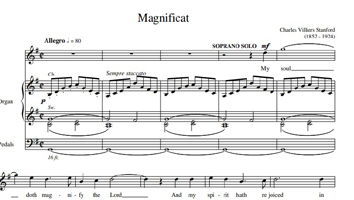
Canticle 15. The Song of Mary. Also known in the Episcopal tradition as the Magnificat, it is a magical mixture of words that, in an experienced singer’s brain, swims through the memory with melody and harmony alike. Generally, Christians are well versed in the Lord’s prayer. Our Father…..hallowed be….they will be….heaven….
Did you fill in the blanks subconsciously just now? That same subconscious practice happens for many singers in this faith when it comes to The song of Mary. I can still hear the exact rhythm and notes that were assigned to certain words in the Magnificat of my very first Evensong at St. Luke’s, even still as I am writing this now, 10 years later. It’s a powerful thing to intermingle words with music. It functions as a prominent and primal part of our being for communication, healing, joy, and overall wellness. Maybe that would explain why composers over the centuries have set this canticle to glorious music. Some of which we have explored in great length and practice at St. Luke’s. The hopeful destiny of the words, mixed with a myriad of musical proponents to illuminate the beauties of God’s call to Mary, have given practitioners a true guiding light, and reminder of the mysteries and lessons of our faith.
Recently, a private voice student of mine was the soloist for a stunning setting of this Canticle. She soared into a high-note heaven with her beginning entrance. My soul——doth Magnify the Lord….she sang through each note with musical precision. But that isn’t what conveyed her message. What this soloist did, wholeheartedly and unabashedly is deliver this song of Mary, as if Mary herself was speaking through her. I am incredibly filled with joy to have watched my student bring such an authentic soul to a piece that is quite actually about the love and glory of God through Mary and Jesus. What a connection. What a beautiful thing to have heard and witnessed. This canticle will live on, like Abraham and his seed, quite actually, forever.
Arielle Rogers-Wilkey