Home > Lenten Blog 2026
So That We Shall Believe
March 22, 2026
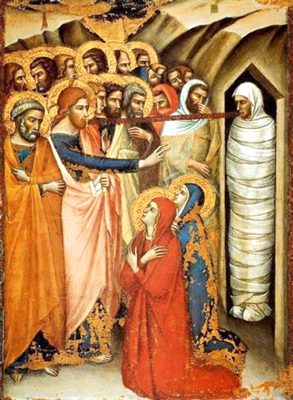
Ezekiel 37:1-14|Romans 8:6-11|John 11:1-45|Psalm 130
“Lord, if you had been here, my brother would not have died.” I find it difficult to read Martha without projecting a little of my own sass-and the weight of prayers that weren’t answered the way that I wanted God to answer them. I wonder if you might feel the same way. Shortly after Glenn’s mom died, his dad was diagnosed with advanced stage lung cancer. It seemed so unfair to me that this man, who had for a decade had devoted himself as the primary caregiver for his wife as her dementia progressed, would not be given a chance to enjoy a few joyful years. “Lord, you saw how he honored you and his marriage. If you’d only shown up differently in the midst of our prayers…”
Fortunately, the Gospel provides us with more of Martha’s comments to Jesus; “But even now I know that God will give you whatever you ask of him.” Martha and Jesus are friends. They’ve spent enough time together for Martha to know that there was something more that Jesus could do. Her heart may be broken, but her faith still stands.
“Your brother will rise again.” For Martha, this answer is an affirmation of a far-away promise; the resurrection at the last day. This is a key belief in the faith of her people. But Jesus is bringing something new to the conversation; a new way of understanding life and death: “I am the resurrection and the life…. Those who believe in me, even though they die will live, and everyone who lives and believes in me will not die. Do you believe this?” Martha, devoted friend and follower of Jesus, says that she does, but when Jesus asks to have the stone rolled away, Martha expresses more confidence in the stench of death than in the defeat of death.
Mary comes, bringing with her a crowd of mourners and something stirs within Jesus. The text describes him as “greatly disturbed in spirit”. In Greek, the word used is enebrimesato (ἐνεβριμήσατο), which according to Strong’s Concordance, comes from en and brimaomai (to snort with anger); to have indignation on, i.e. (transitively) to blame, (intransitively) to sigh with chagrin, (specially) to sternly enjoin — straitly charge, groan, murmur against. If I want to read Martha with a little bit of attitude, I’d like to read weeping Jesus more like pacifist-hippie Jesus: “bummer, Man, what happened to Lazarus was such a downer, here’s a hug.” He’s safer that way. Weeping or not, this Jesus has a point to make. It’s roiling up inside of him. Stench or no stench, that stone is going to be rolled away. He’s going to command Lazarus to come out. Lazarus will obey that command and walk. This isn’t just a feel-good thing Jesus is doing to help his beloved friends. This points to something much bigger; Jesus is proving that he is who they believe him to be, and that even death is under his authority. He is, in fact, his Father’s Son. The family resemblance is apparent in Ezekiel’s prophecies to the dry, hopeless, exiled bones of Israel: “I will put my spirit within you and you shall live, and I will place you on your own soil; then you shall know that I the LORD have spoken and will act,” says the LORD.
Lazarus was given more time, but Glenn’s dad was not. And yet, I assert my belief. In her commentary on the Gospel of John, the theologian Gail R. O’Day writes, “(Martha’s) confession…rings more of the old than it does of the radical new life offered by Jesus. Martha embodies the central question of this Gospel: Will the faithful continue to contain Jesus within their own predetermined categories, however well intended those categories may be, or will believers allow Jesus to shatter those categories and offer them the radical fullness of his grace?” It is a good question for Lent. On the day Lazarus was raised from the dead, “many saw and believed.” May God use this Lent to pour his spirit into us and lead us into deeper belief.
Deb Dioguardi